
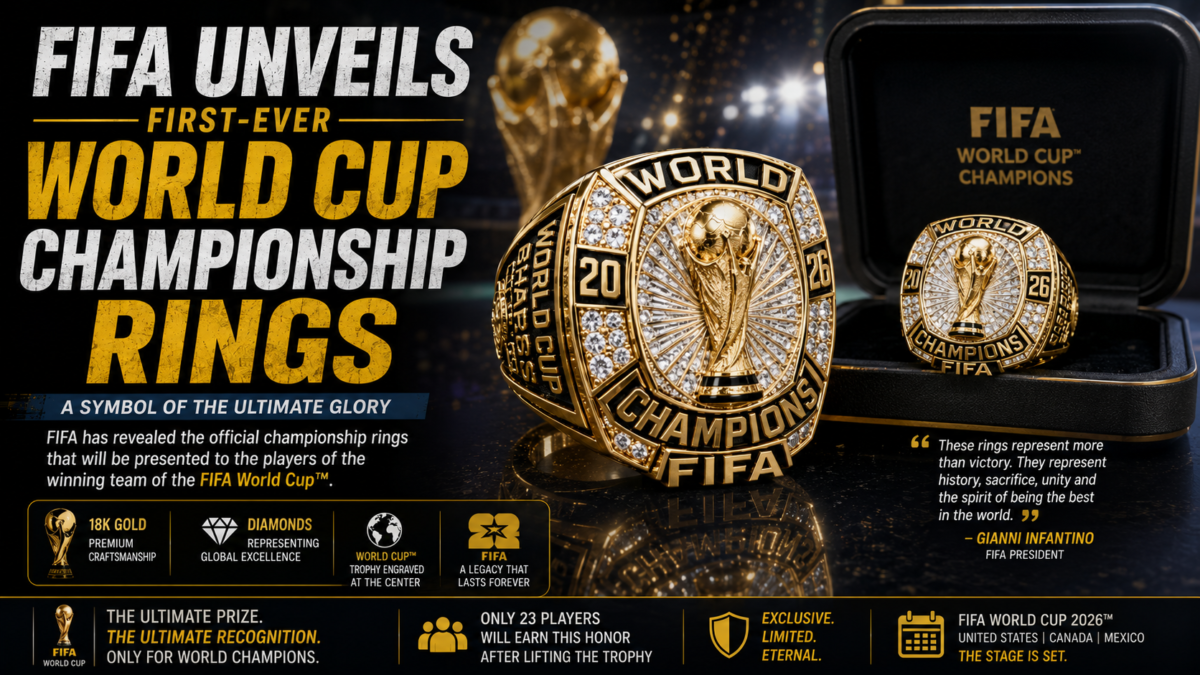
Football has borrowed something from American sport, and it arrives just in time for the biggest match on the planet. FIFA has confirmed that the winner of Sunday’s World Cup final between Spain and Argentina will receive championship rings, the first time in the tournament’s near-century of history that players will walk away with a piece of jewellery to mark the achievement.
A New Tradition Born in America
The timing is no accident. This is the first World Cup staged across the United States, Canada and Mexico, and FIFA has leaned into the aesthetics of North American sport throughout the summer, from the stadium presentation to the halftime spectacle planned at MetLife. Championship rings are a fixture of the Super Bowl, the NBA Finals and the World Series, where they function as both trophy and heirloom. Football has never had an equivalent. Medals are handed out, of course, and the trophy itself is lifted and then returned, but nothing has ever gone home with a player to be worn rather than boxed away.
FIFA’s calculation appears to be that a ring travels further than a medal. It is visible, it is personal, and it carries a story that can be told for decades. Whether the tradition survives beyond 2026 will depend on how the players themselves receive it, but the governing body has clearly decided the experiment is worth running at the most-watched football match ever played.
How the Rings Will Be Distributed
The production run is deliberately symbolic. A total of 2,026 individually numbered rings will be made, echoing the year of the tournament. Thirty of those go to the winning team, covering the playing squad and key members of the backroom staff. The remaining 1,996 will be released to the public as an official licensed product, meaning supporters anywhere in the world will be able to buy a numbered ring from the same limited run as the champions.
On the night itself, the captain and the head coach will each be presented with a temporary ring during the trophy ceremony. The fully customised versions, engraved with the winning nation’s crest and individual detailing, will be produced afterwards and presented at a later date. That two-stage approach mirrors how championship rings work in American leagues, where the finished article typically arrives months after the confetti has been swept away.
The Design and What It Represents
The rings carry the World Cup trophy on one flank, with the logo of the victorious nation set on the opposite side. It is a restrained design by the standards of American championship rings, which have grown steadily larger and more encrusted over the years, but the intention is legible enough. One side is the competition; the other side is the country that conquered it.
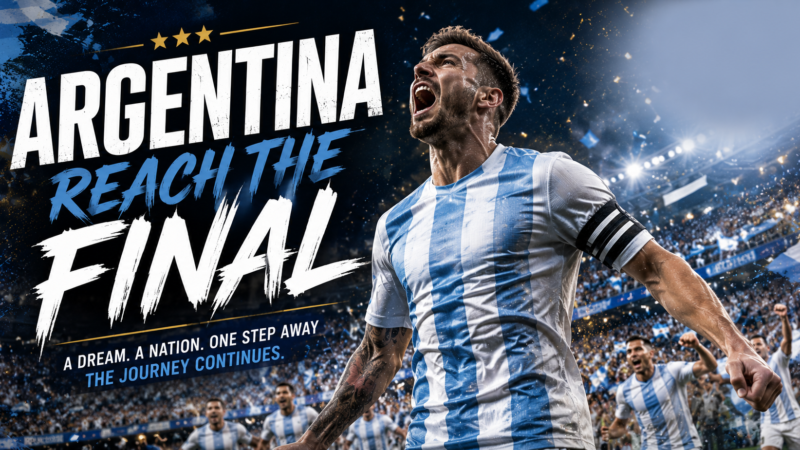
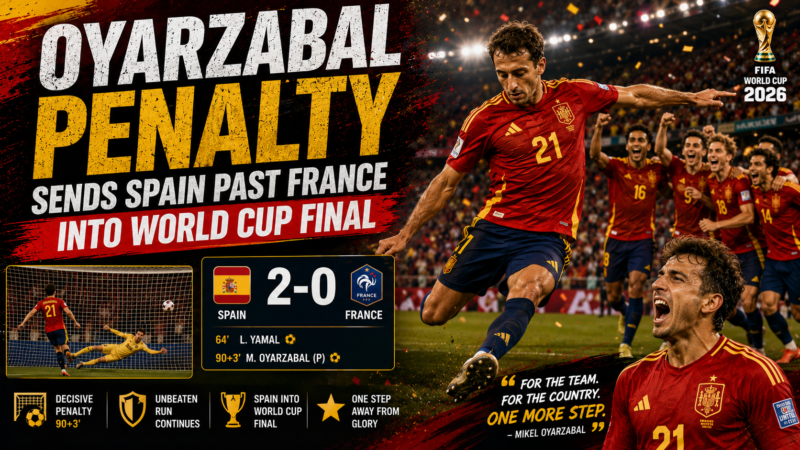
For Argentina, a ring would mark a defence of the title won in Qatar and a fourth star that would put them level with Italy and Germany. For Spain, it would be a second world title to sit alongside the European crowns that have defined this generation, and a first for a squad that has spent the tournament playing some of the most controlled football on show.
A Commercial Move With Emotional Reach
There is an obvious commercial dimension here, and FIFA has not pretended otherwise. Selling nearly two thousand numbered rings to supporters is a revenue line as much as a keepsake programme. But the emotional logic is sound. Football supporters already collect shirts, scarves and match tickets from the moments that matter to them, and a numbered object tied directly to a specific final has a scarcity that a replica jersey does not.
The rings also land in a tournament that has been unusually willing to break with convention. The expanded 48-team format, the halftime show, the ring ceremony: this has been a World Cup constructed for a North American audience without apology, and the reaction has been broadly warmer than the sceptics predicted.
What Happens Sunday
None of it means anything until someone wins. Spain arrive unbeaten, Argentina arrive with the reigning champions’ swagger and Lionel Messi still shaping matches at an age when most of his contemporaries have long since stopped. Eleven players from one of those squads will finish Sunday evening with a ring on the way, and the other eleven will finish with the medal nobody wants.
Whichever way it falls, a small piece of World Cup history will be minted alongside the result, and 1,996 supporters will eventually own a version of it.

Leave a Reply