
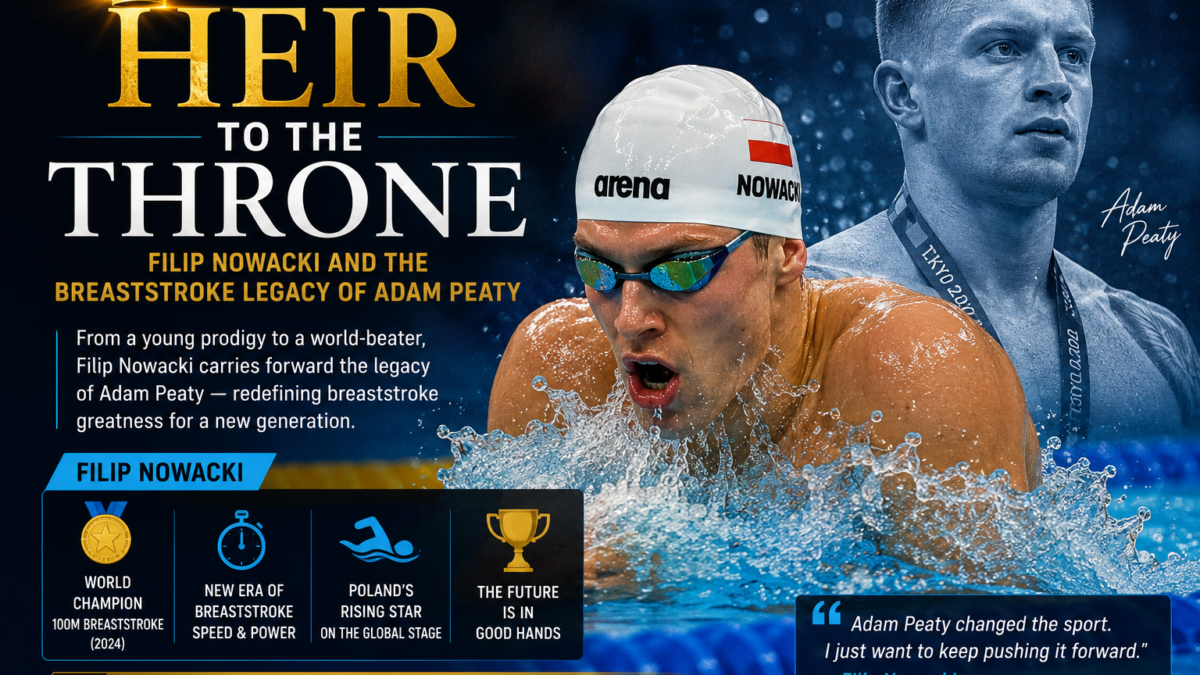
A decade after Adam Peaty exploded off the blocks in Rio to claim gold and a world record in the 100m breaststroke, British swimming is once again searching for its next great sprinter. In a new exclusive, rising star Filip Nowacki opens up about what it means to follow in those formidable footsteps — and why a single legendary swim still shapes the ambitions of a generation.
The Swim That Set the Standard
When Adam Peaty touched the wall at the Rio 2016 Olympic Games, he did more than win a gold medal — he redrew the boundaries of what was thought possible in the 100m breaststroke. Peaty captured Great Britain’s first male swimming Olympic title in 28 years and lowered his own world record in the process, announcing himself as the most dominant force the discipline had ever seen.
That performance became a reference point. For nearly a decade, every emerging British breaststroke specialist has been measured against the benchmark Peaty established in that Brazilian pool. His blend of explosive power, relentless tempo and competitive fearlessness turned a single race into a template for an entire national program.
A New Name Steps Forward
Enter Filip Nowacki. In his exclusive interview with Olympics.com, the rising British breaststroke talent speaks candidly about the weight and the privilege of being mentioned in the same breath as Peaty. Rather than shrinking from the comparison, Nowacki leans into it — drawing on the Ramsay-Peaty legacy as motivation rather than burden.
Succession in elite sport is rarely about replacing a champion outright; it is about absorbing the standard they set and pushing it forward. For Nowacki, following in Peaty’s footsteps is less about imitation and more about inheriting a mindset: the belief that British breaststroke belongs at the very top of the podium.
Why Legacy Drives Achievement
Nowacki’s story arrives at a fitting moment, as the swimming world reflects on the enduring power of Olympic milestones. The lineage from Peaty’s Rio triumph to today’s contenders is a vivid illustration of how a single medal can echo for years. Champions do not simply win and disappear — they create the gravitational pull that draws the next wave of athletes toward greatness.
A gold medal is an individual reward, but its truest value often lies in what it inspires: the teenagers who watched Rio 2016 and decided breaststroke was their event, the coaches who built programs around Peaty’s technique, and rising names like Nowacki now carrying that ambition into a new Olympic cycle.
The Road Ahead
For Nowacki, the challenge is clear and unforgiving. Living up to a world-record legacy demands not only talent but consistency, resilience and the willingness to be measured against the best. Yet the very existence of that standard is what makes the pursuit worthwhile. Peaty proved the summit was reachable; the next generation’s task is to climb it again.
As British swimming looks toward the future, the throughline from Rio 2016 to the present is a reminder of why we celebrate medals in the first place. They are not endpoints but invitations — markers that tell the next athlete exactly how high the bar has been set, and dare them to raise it. Keep an eye on Filip Nowacki: if his words are matched by his performances, the breaststroke legacy Adam Peaty built in Rio may be entering its most compelling chapter yet.

Leave a Reply