
A Record Nobody Wanted
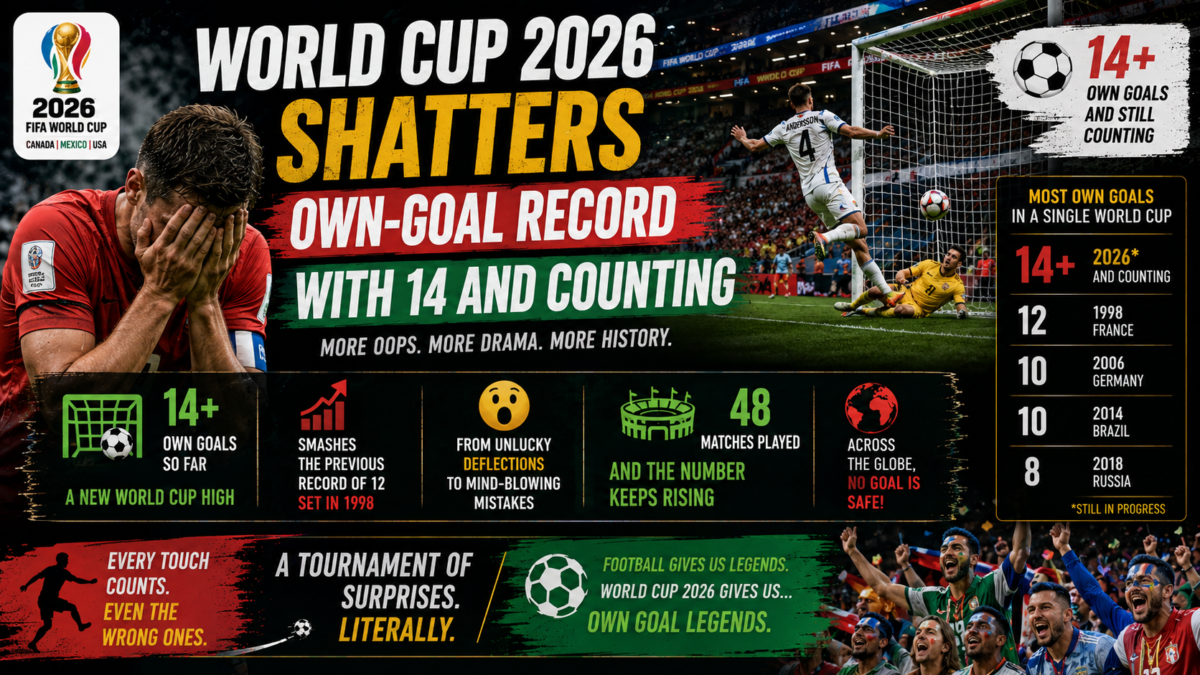
The 2026 World Cup has broken a scoring record of a different kind: the tournament has now produced 14 own goals, surpassing the previous all-time high of 12 set at Russia 2018, with two own goals arriving on the same knockout weekend. The milestone was reached when Egypt defender Mohamed Hany inadvertently diverted the ball into his own net during Egypt's penalty-shootout win over Australia, and the tally climbed further hours later when Cape Verde’s Diney Borges added another during Cape Verde's extra-time defeat to Argentina.
Why the Numbers Keep Climbing
Analysts point to several factors behind the surge, chief among them the expanded 48-team format that has introduced more nations, and more defenders, unfamiliar with facing the game’s highest-pressure attacking talent. The heat and humidity across several host cities have also been cited as contributing to fatigue-driven errors in the penalty area, particularly in matches that stretched into extra time. VAR reviews, which allow officials to scrutinize marginal touches that might once have gone unnoticed, have also played a role in confirming own goals that in previous tournaments might have been credited to the attacking side instead.
Part of a Wider Records Tournament
The own-goal mark is only one entry on a growing list of milestones from this World Cup, which has already broken the tournament’s all-time attendance mark, passing 5 million spectators before the knockout rounds were even complete. The group stage alone produced 215 goals, eclipsing the 172 scored during the group phase in Qatar four years ago, while more than a fifth of all goals so far have come from substitutes, the highest share in World Cup history.
A Symptom of an Attacking Tournament
Rather than reflecting poor defending, many pundits argue the own-goal record is a byproduct of a tournament defined by relentless attacking pressure. With more elite forwards on the pitch across more matches than any previous World Cup, defenders are being asked to make more high-speed, high-stakes interventions inside their own box, and a fraction of those interventions were always going to end up in the back of the net. FIFA’s technical study group is expected to reference the figure in its post-tournament report as evidence of the expanded format’s impact on the game’s competitive balance.
Records Still to Fall
With the quarterfinals, semifinals and final still to come, officials expect both the own-goal tally and the overall goals-scored record to climb further before the tournament concludes at MetLife Stadium on 19 July, a reminder that a World Cup built for drama has delivered it in ways both spectacular and unintentional.



Leave a Reply