
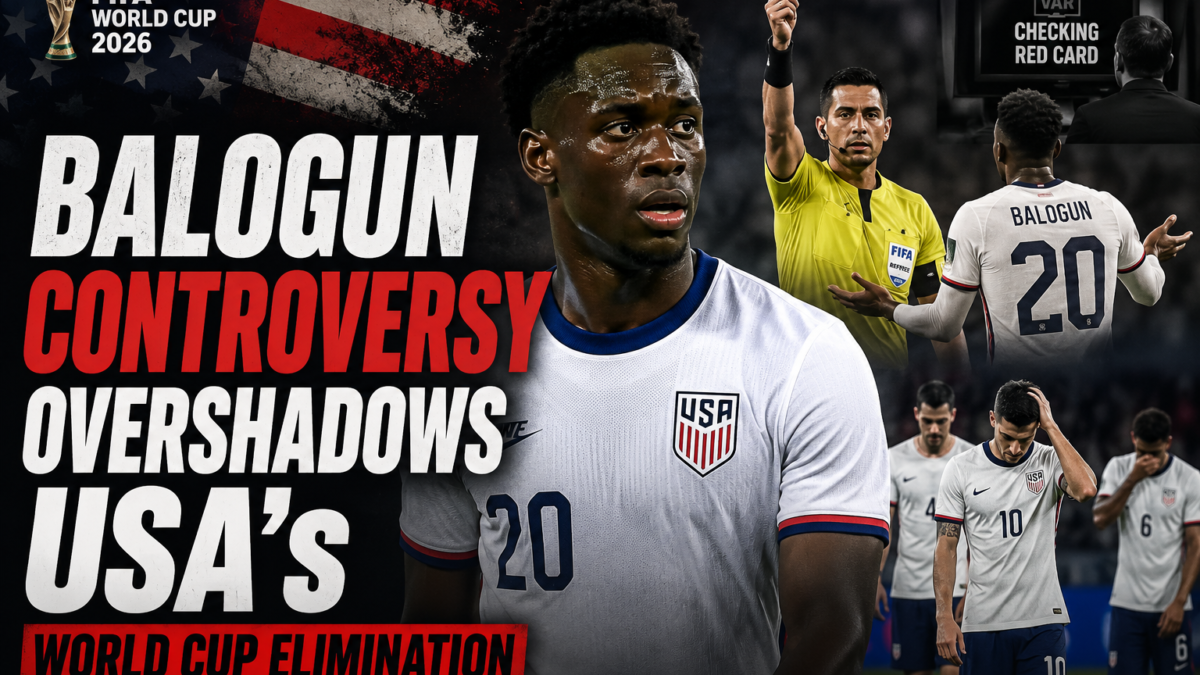
A Red Card That Followed the USMNT to Seattle
Long before kickoff on Monday, the storyline surrounding the United States’ round of 16 meeting with Belgium had shifted away from tactics and toward a single flashpoint: whether Folarin Balogun should have been on the field at all. Balogun’s red card in the group-stage win over Bosnia, chronicled at the time, triggered a review process that stretched into the days before the Belgium match, with the Royal Belgian Football Association formally objecting to his inclusion in the U.S. lineup.
The dispute escalated well beyond football circles. Reports emerged that President Trump had personally telephoned FIFA president Gianni Infantino to encourage a review of the red card, an intervention that drew criticism from figures within the Belgian federation and elsewhere in the sport who argued political pressure had no place in disciplinary proceedings. FIFA ultimately allowed Balogun to start, and Belgium’s players made pointed references to the episode during their on-field celebrations after the final whistle, suggesting the saga had added an extra layer of motivation to their performance.
An Anonymous Night for the Man at the Center
For all the noise surrounding his availability, Balogun’s actual impact on the match was minimal. The striker failed to register a goal or an assist across ninety minutes as Belgium raced to a 4-1 win, leaving the pre-match controversy as, in hindsight, a distraction from a contest Belgium controlled comfortably from an early stage. Whether a different outcome on the eligibility question would have changed the U.S. approach or personnel is now a moot point given the scoreline.
A Storyline That Won’t Fade Quickly
The episode is likely to linger in discussions about the intersection of politics and international sport well after the tournament moves past the round of 16. U.S. Soccer has not issued an extended statement beyond confirming Balogun’s eligibility was cleared through normal disciplinary channels, while Belgian officials have continued to characterize the process as improperly influenced. FIFA, for its part, has maintained that its disciplinary committee reached its decision independent of any outside contact.
For a U.S. program already facing scrutiny after a second consecutive round of 16 exit, the Balogun affair adds a layer of controversy to a tournament many hoped would mark a breakthrough on home soil. As the World Cup moves into the quarterfinal stage, the episode stands as a reminder of how quickly disciplinary matters in a global tournament can extend beyond the touchline.


Leave a Reply