

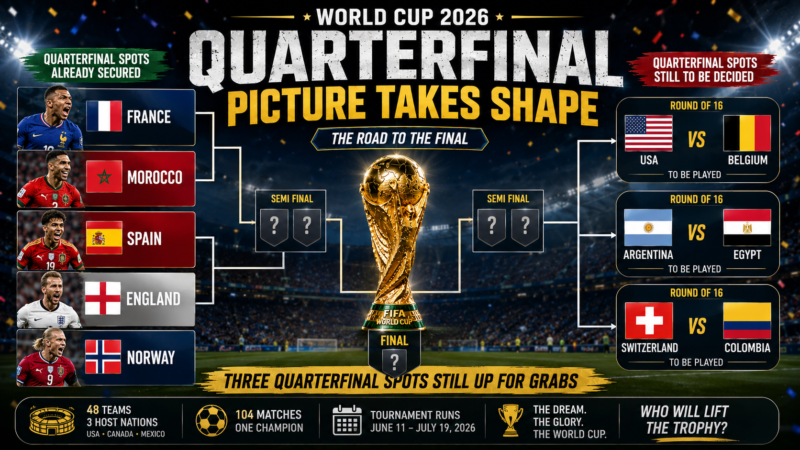
When the floodlights dimmed at Gillette Stadium on Thursday night, they closed not just a match but an era. The France versus Morocco quarterfinal, a rematch of the 2022 semifinal, was the final World Cup fixture staged in Foxborough, bringing Boston’s role in the 2026 tournament to an end after a month that exceeded the region’s most optimistic projections.
A Month That Changed the City’s Summer
Rebranded Boston Stadium for the duration of the tournament, the home of the New England Patriots spent June and July hosting group-stage drama and knockout tension in front of capacity crowds. Local officials spent years preparing for the logistical strain of World Cup traffic on Route 1, and the region answered with the kind of turnout that helped push the tournament past its record-shattering five million total attendance. Fan zones in downtown Boston drew tens of thousands on matchdays, with Moroccan and French supporters turning the city’s streets into a preview of the stadium atmosphere.
The farewell fixture was a fitting headliner. France against Morocco carried the emotional charge of their Qatar semifinal four years ago, a match that made the Atlas Lions a global cause, and Thursday’s sold-out rematch gave New England a quarterfinal with genuine World Cup weight, kicking off at 4 p.m. local time before a worldwide audience.
What Boston’s World Cup Leaves Behind
Host cities measure these tournaments in more than goals. Like Kansas City, where Arrowhead's World Cup run became a story of Midwest hospitality, the Boston area treated its hosting slate as an audition for a permanent place on football’s map. Hotel occupancy and restaurant trade through the tournament window ran well ahead of a typical summer, and youth soccer organisations across Massachusetts report registration interest at levels not seen since the 1994 World Cup planted the sport’s first deep American roots.
There is also a sporting legacy in the ground itself. Gillette Stadium has now staged World Cup football across two eras of the American game, and the 2026 edition arrived with the region’s soccer culture fully formed rather than aspirational, a difference visible in the fluency of the crowds as much as the scale of them.
The Tournament Moves On
With Foxborough’s slate complete, the World Cup’s centre of gravity shifts to the semifinal stages in Arlington and East Rutherford, and to the July 19 final at New York New Jersey Stadium. Boston’s part in the story is finished, but the bet the city made, that a region famous for its four major franchises had room in its heart for a fifth obsession, paid off in full. The World Cup came to New England and New England, emphatically, showed up.


Leave a Reply