
A Reinvented Games Gets Down to Business
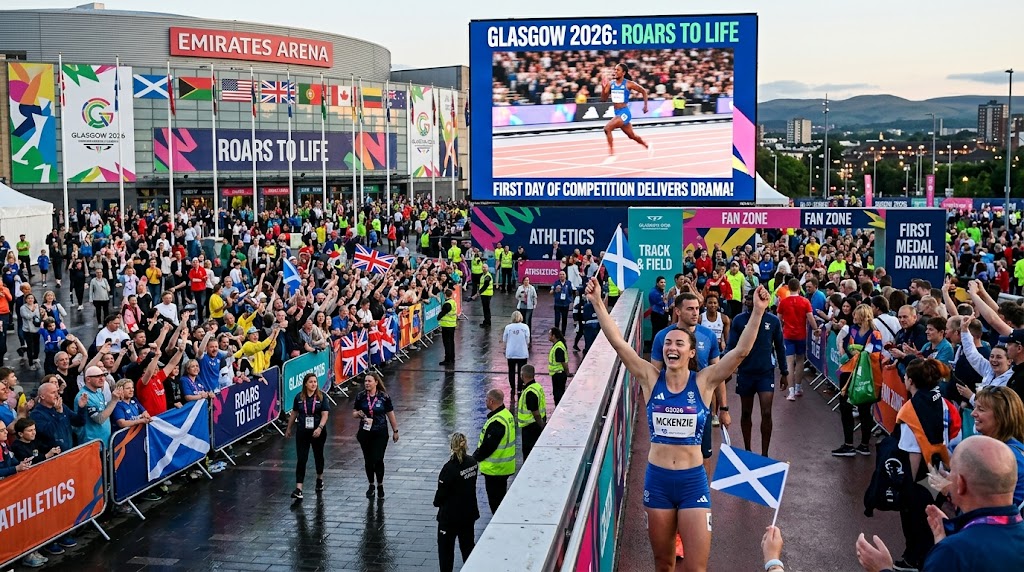
The morning after King Charles III declared Glasgow 2026 open, the Commonwealth Games finally traded ceremony for competition. Friday 24 July was the first full day of action at a deliberately slimmed-down Games built around ten sports, and it wasted little time producing the kind of theatre that keeps this multi-sport event alive. Fourteen medals were on offer across para powerlifting, swimming and men’s artistic gymnastics, and the venues that had spent months rehearsing suddenly had scores, times and podiums to fill.
The headline moment arrived in the most improbable fashion in para powerlifting, where England’s Mark Swan claimed the very first gold of Glasgow 2026 by a fraction of a point. Swan pressed a personal best of 222kg, more than three times his own body weight, and was left level on 153.9 points with Nigerian veteran Roland Ezuruike before a tie-break separated to two decimal places went his way. So fine were the margins that Swan initially believed he had finished with bronze until his coach corrected him.
The Pool Opens for Business
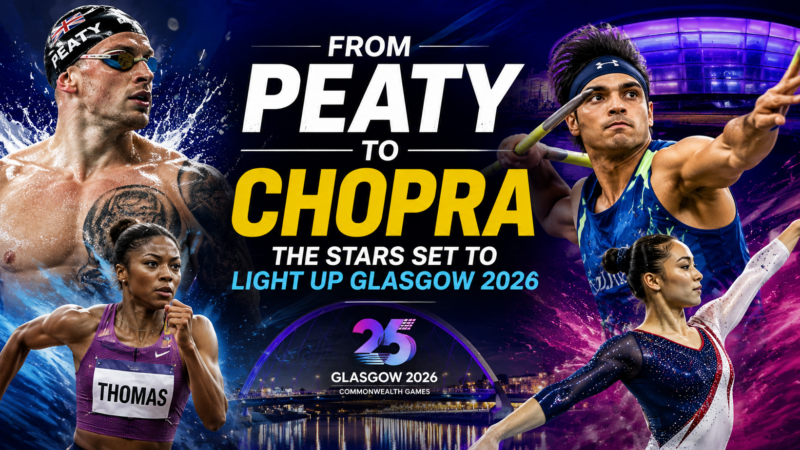
At the Tollcross International Swimming Centre, the roar that greeted the first heats confirmed swimming’s status as the box-office draw of these Games. Nine golds were up for grabs across the opening programme, and the biggest names moved efficiently through qualifying. Adam Peaty, a local hero who first tasted major-Games swimming in this very city in 2014, posted the quickest time of the men’s 100m breaststroke heats, a reminder that the sport’s most decorated breaststroker still sets the pace.
Australia’s Lani Pallister signalled her intent in the women’s 400m freestyle, opening what she hopes will be a distance treble against New Zealand’s Erika Fairweather. The rivalry between the two, separated by hundredths in qualifying, framed an evening session in which the Dolphins made clear they intend to improve on the haul they claimed at Birmingham 2022.
India Off the Mark
India’s campaign began before a single Indian athlete had even entered a field of play. Boxer Lovlina Borgohain was guaranteed a medal after the draw handed her a favourable route deep into the women’s 75kg competition, ensuring the contingent would not leave Glasgow empty-handed regardless of what followed. On the greens, the pairing of Pinki Singh and Rupa Rani Tirkey opened India’s lawn bowls account with a composed win in the women’s pairs, an event in which India has quietly built genuine pedigree.
Numbers That Set the Tone
Fourteen medals on the opening day is a modest figure by the standards of the sprawling Games of the past, and that is precisely the point. Glasgow 2026 was rebuilt around a tighter core of ten sports after a change of hosts forced a rapid rethink, and the organisers have leaned into the constraint, promising a Games that trades scale for atmosphere. The compact footprint keeps venues close together and crowds concentrated, and the early evidence from a buzzing first day suggested that concentration can heighten rather than dilute the spectacle. For athletes, fewer events means sharper focus; for spectators, it means a schedule that is easier to follow and harder to look away from.
Gymnastics Under the Lights
The SEC Centre hosted the men’s artistic team final, the discipline’s marquee opening event, with Team England fancied to convert home-nation support into gold. Australia leaned on the experience of Jesse Moore, the sole survivor of the side that finished fourth in Birmingham, surrounded by a clutch of debutants tasked with announcing themselves on the biggest stage of their careers.
What emerged from day one was a portrait of a Games determined to prove that smaller can still mean serious. Stripped of several traditional crowd-pleasers, Glasgow 2026 has bet on intensity over sprawl, and the opening day rewarded that gamble with tight finishes, breakout performances and the unmistakable buzz of a Scottish crowd that had waited a long time for the Commonwealth to come home. With the stars everyone came to watch only now hitting their stride, the organisers will feel the reinvented model has passed its first examination.

Leave a Reply