
A Different Kind of World Cup City
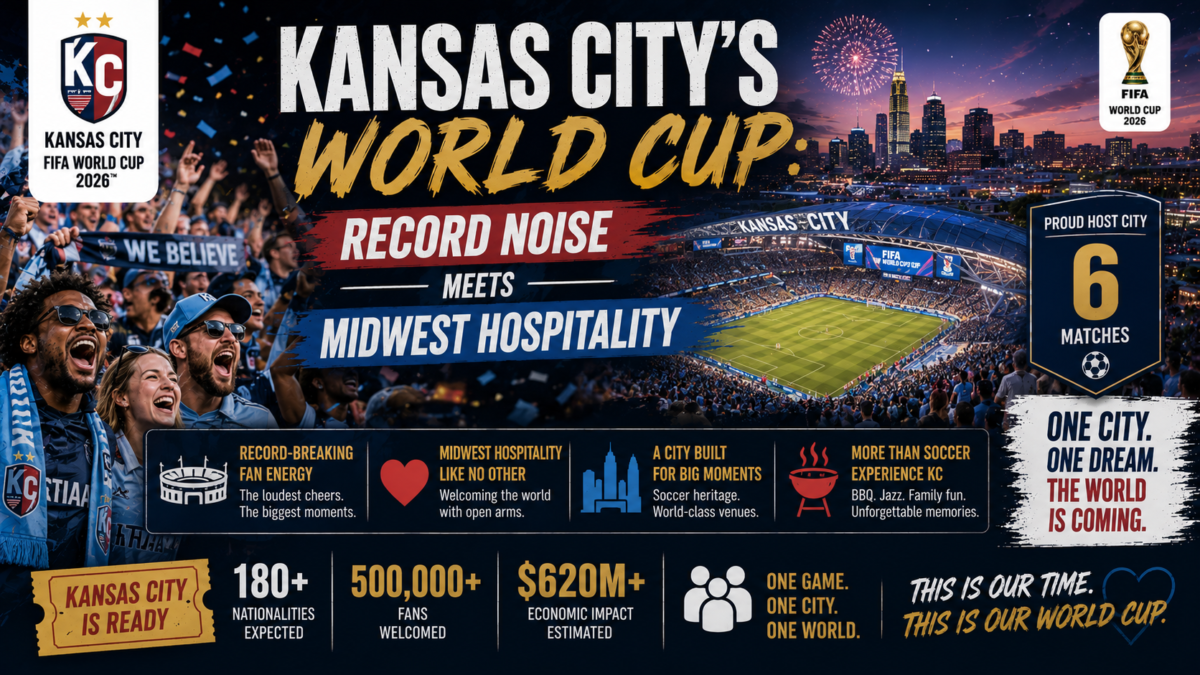
Kansas City may not carry the global name recognition of New York, Los Angeles, or Mexico City, but the Missouri city has quietly become one of the most talked-about stops on the 2026 World Cup map. With a metro population of roughly 2 million, the city is bracing for an estimated 650,000 visitors during the tournament, a scale of hospitality that few midsize American cities have ever had to plan for.
Arrowhead’s Record-Setting Roar
At the center of Kansas City’s World Cup identity is Arrowhead Stadium, home to more than 76,000 soccer fans for the tournament’s matches there. The stadium already holds the Guinness World Record for the loudest crowd roar ever recorded at a sports venue, a distinction earned through Kansas City Chiefs NFL games that organizers expect World Cup crowds to test again. For visiting fans unfamiliar with the venue, the noise alone has become part of the pitch.
Fan Culture Beyond the Stadium
Kansas City’s appeal extends well past matchday. The city’s fan zone, located outside the National World War I Museum and Memorial, is set to run for 18 days and will showcase local food, drink, and live music as a way of introducing international visitors to Midwestern American culture. Between craft breweries, renowned barbecue restaurants, a thriving jazz scene, and ample green space, organizers have leaned into showcasing what makes Kansas City distinct rather than trying to compete with the scale of larger host cities.
Punching Above Its Weight
Part of what makes Kansas City’s hosting story compelling is the contrast between its relatively modest size and the enormity of the event it is helping stage. Cities like Atlanta and Seattle bring larger populations and more extensive tourism infrastructure, yet Kansas City’s combination of an internationally famous stadium atmosphere and a close-knit, walkable downtown has drawn praise from fans and pundits looking for an authentic slice of American life alongside the football.
A Legacy Play
For Kansas City officials, hosting matches is as much about long-term visibility as it is about the month-long event itself. A successful World Cup run could reshape how the city is perceived on the international sports and tourism stage for years to come, giving it a permanent place in the conversation alongside cities many times its size. As the tournament moves deeper into the knockout rounds, Kansas City’s blend of noise, hospitality, and Midwestern charm has already left an impression on the thousands of traveling fans who have passed through.




Leave a Reply