

Quiet Change, Big Statement
Women’s ice hockey at the 2030 Winter Olympics in the French Alps is set to feature 25-player rosters, expanding from the current 23 and matching the men’s allocation for the first time in Olympic history. The change was included, without fanfare, in the event programme released by organisers this week — but its significance for the women’s game is anything but quiet.
Men’s Olympic hockey has operated with 25-player rosters for the past four Games, going back to Sochi 2014, giving coaches an extra goaltender and skater to manage injuries and back-to-back games in a compressed tournament. Women’s teams have had to make do with two fewer, a disparity that federations and players’ associations have long flagged as one of the sport’s lingering double standards. From 2030, that gap closes.
Part of a Gender-Balanced Games
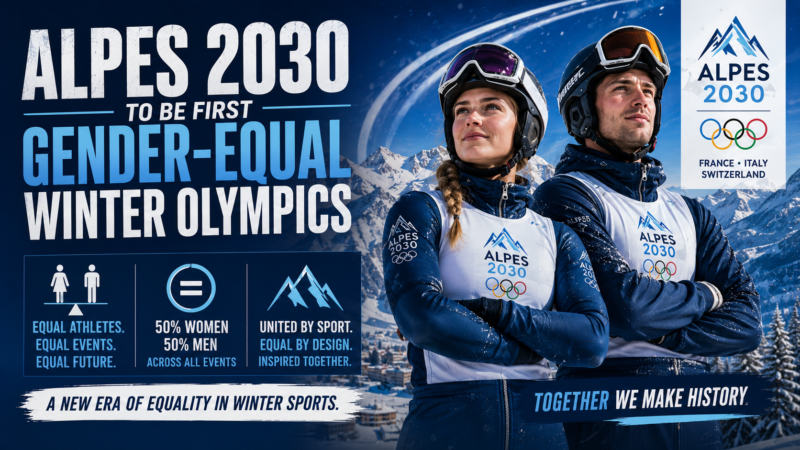
The roster expansion fits the broader identity of the 2030 Games, which are being billed as the first gender-equal Winter Olympics, with 1,525 women and 1,521 men projected among 3,046 athletes across 126 events. Equal roster sizes in hockey are exactly the kind of detail that ambition demands — parity not just in headline athlete counts, but in the working conditions of each sport.
Full equality in hockey remains a step away, though. The women’s tournament will still field 10 teams to the men’s 12, meaning roughly 300 men to 250 women on Olympic ice even after the roster change. Expanding the women’s field remains the obvious next frontier, and advocates will see 2030’s roster parity as leverage for that argument rather than the end of it.
Momentum the Women’s Game Has Earned
The change lands at a moment of genuine momentum. The women’s tournament at Milano Cortina 2026 delivered some of those Games’ most-watched moments, while the men’s event produced an American golden generation ending a 46-year wait against Canada — a reminder of how central hockey is to the Winter Olympic product on both sides. With the PWHL professionalising the club game in North America and European leagues deepening, national team pools are stronger than they have ever been.
Two extra roster spots per team may sound like a technicality, but they translate into more Olympians, more development incentive for fringe players, and tactical flexibility that coaches in the women’s game have never enjoyed at an Olympics. For a generation of players who grew up watching their federations argue over per diems and charter flights, parity written quietly into an official Olympic programme document is its own kind of victory — the kind that no longer needs an announcement.



Leave a Reply